
To start an arcade business, pick a model (pay-per-play, card-based with redemption, flat-rate or barcade), size your floor, budget for games and build-out, write a plan a lender can read, and get your licenses and zoning sorted before you sign a lease. A mid-size venue in the US can run into six figures, so the order you do things in matters as much as the money. This guide walks through that order, with real cost ranges, the game mix that tends to earn, the permits to check, and where pinball machines earn their floor space.
TL;DR
- Budget for a range, not a number: a small game room can start in the low six figures, while a true mid-size venue more often lands between $250,000 and $650,000 all-in.
- Games are usually 30% to 50% of the startup budget. The rest goes to leasehold work, systems, deposits and several months of cash.
- Licenses are local. Check your city and state for amusement device permits, zoning, food and alcohol rules and music licensing before you lease.
- Mix your floor on purpose: redemption, video, merchandisers and a pinball row that gives adults and families a reason to come back.
- Build your plan on plays per game per day, with weekdays and weekends modeled separately.
Table of Contents
- Pick your arcade model first
- What it costs to start an arcade
- Choosing a location and sizing the floor
- Building the game mix
- Licenses, permits and local rules
- Write a plan a lender can read
- Revenue streams beyond game play
- Our perspective on pinball in a new arcade
- Stock your pinball row with Old Town Pinballs
- FAQ
- Sources
Pick your arcade model first
Every later decision follows from the model, so settle it before you look at buildings.
Pay-per-play is the classic: coins or tokens, each game priced on its own. It suits retro rooms and bars with a small footprint.
Card-based with redemption is what most family venues run. Guests load a card, play, collect tickets and trade them for prizes. It supports parties, memberships and promotions.
Flat-rate or timed play charges an entry fee or an hourly wristband and lets guests play freely. It simplifies pricing but changes your revenue math.
Barcade adds a bar and kitchen. Revenue per square foot can rise, but so do the licensing, build-out and staffing requirements.
If you want a small, lower-risk first step, a game room with a tight list of cabinets is easier to launch and learn from than a 10,000-square-foot venue. Many operators start there and expand once they know their plays-per-game numbers.
What it costs to start an arcade
The honest answer is a wide range, driven by square footage, city and how much of the building you have to rebuild.
Report Desk’s cost guide puts a true mid-size US venue at roughly $250,000 to $650,000 all-in. It also reports that games typically make up 30% to 50% of the start-up budget, with the rest going to leasehold work, systems, deposits and three to six months of cash. The same guide cites commercial tenant improvement at about $75 to $200 per square foot in 2026, and electrical upgrades for a 40-machine floor with a kitchen and bar commonly at $25,000 to $80,000.
A smaller room costs less. One published estimate for an arcade and gaming center in a Texas suburb breaks the budget into licenses, lease and build-out, games, insurance, concessions, marketing and working capital, with games alone as the largest block. Treat any single local figure as a sketch of proportions, not a quote for your town.
What machines cost
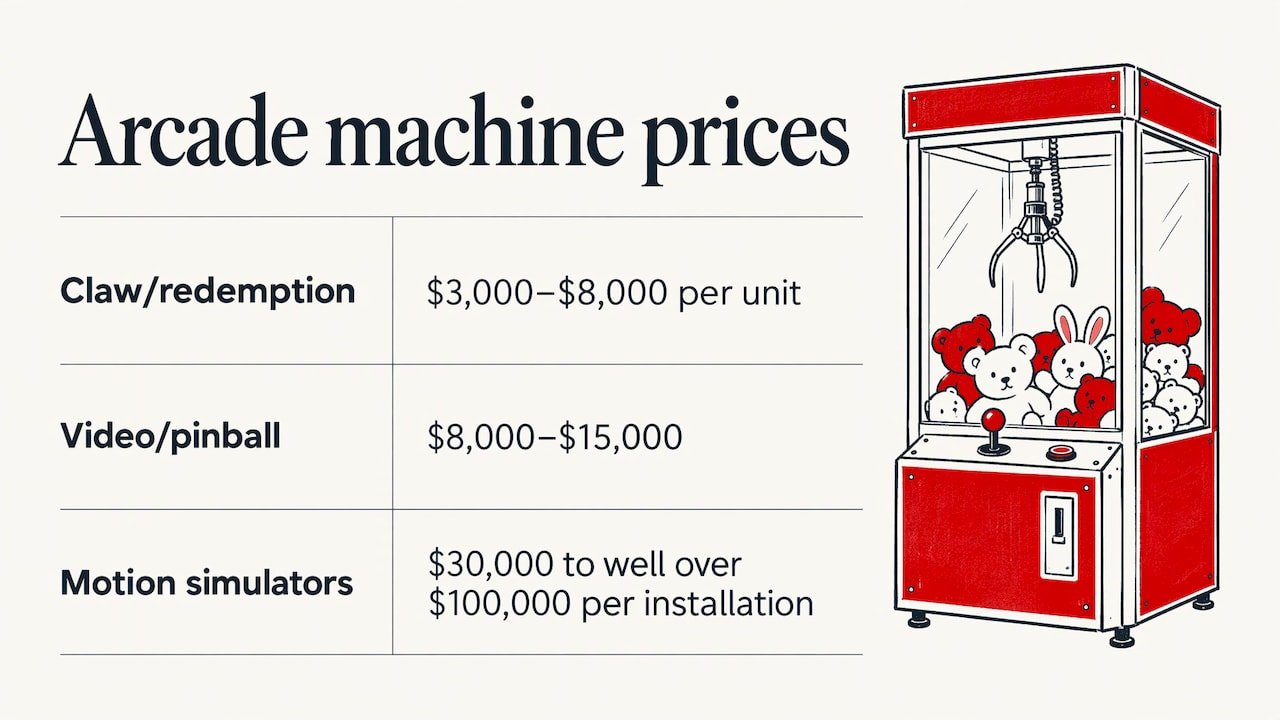
Game prices are the part you can pin down. According to IndexBox’s 2026 US amusement machine report, claw machines and compact redemption games typically retail for $3,000 to $8,000 per unit. Mid-range arcade video games and pinball machines price from $8,000 to $15,000, and motion simulators run from $30,000 to well over $100,000 per installation.
That spread explains why the mix matters. A floor of 20 machines at $8,000 to $15,000 is a $160,000 to $300,000 game budget before a single wall is painted. Pinball sits in the middle of that range, and unlike many cabinets it is a machine that keeps its appeal and can be bought new or used, which gives you room to fit the budget.
Lead times and the order of operations
Plan the calendar around slow items. Ordering games can take several weeks, build-outs take weeks to months, and hiring and training need their own runway. Attractions Marketing Pros describes a typical sequence: register the business and get an EIN, submit permits early, secure funding, order games (many take 6 to 10 weeks to arrive), prepare the building (45 to 75 days), hire about 30 days before a soft opening, then hold a soft opening for a small group before the grand opening.
A practical order:
- Choose the model and the target floor size.
- Write the plan and the game list with prices.
- Check zoning and permit rules for the specific address, before the lease.
- Form the entity, get the EIN, open a business bank account.
- Secure funding and sign the lease.
- Order games while the build-out runs.
- Hire, train, soft open, then launch publicly.
Choosing a location and sizing the floor
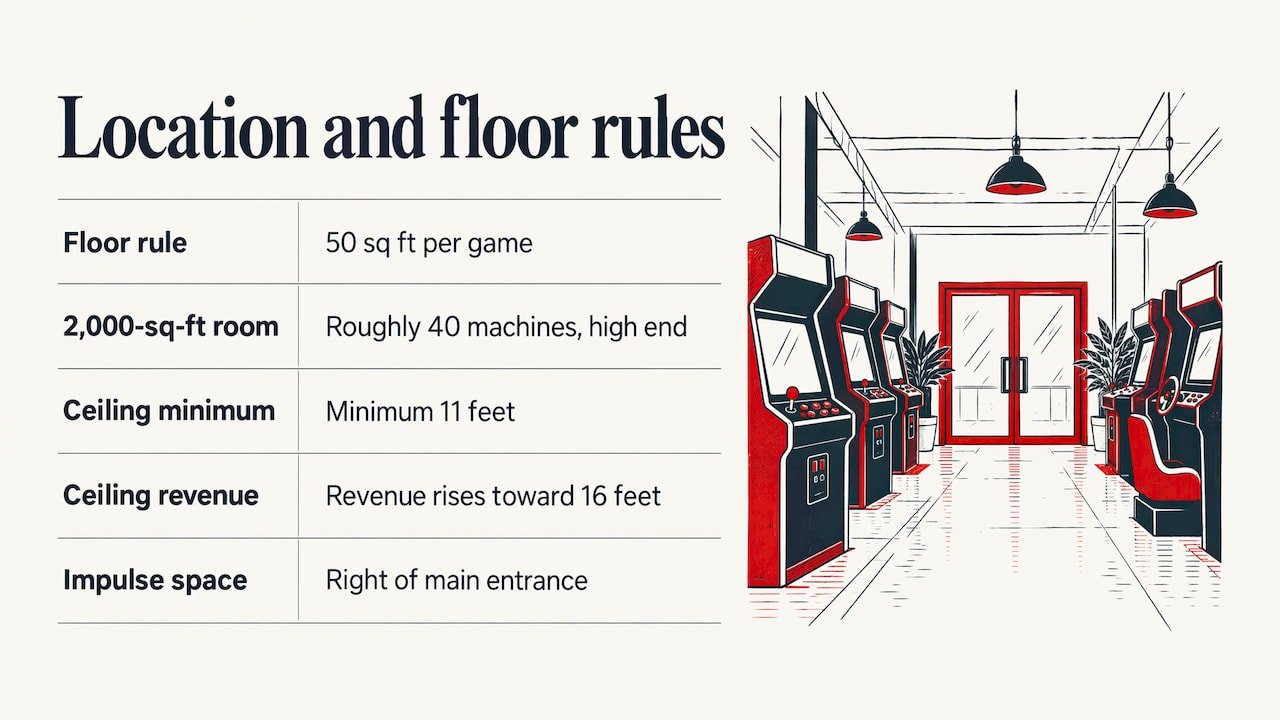
A common rule of thumb is about 50 square feet per game, which includes walking room. A 2,000-square-foot room therefore holds roughly 40 machines at the high end, fewer if you add seating, a counter or a party room.
Look for high-traffic suburban or urban sites near malls, schools, cinemas or transit. Ceiling height matters more than most first-timers expect: veteran operator Frank Seninsky, in a 2011 industry article, recommends a minimum of 11 feet and says game revenue rises as ceilings approach 16 feet. He also suggests that the best impulse space is to the right of the main entrance, since most people are right-handed and walk counter-clockwise.
Before you commit, confirm three things in writing: that the zoning allows an amusement use at that address, that the electrical service can carry your machines (and kitchen, if any), and that accessibility requirements can be met. Fixing any of these after you sign costs far more than asking first.
Building the game mix
Do not buy what you like and hope. Build the mix from what earns per square foot.
According to IAAPA’s guide to building an arcade, about 65% to 70% of a high-performing arcade is redemption-based, video games take 15% to 20% of the mix, and the remaining 10% to 20% are instant-win merchandisers. The same piece advises aiming for at least $200 per game per week, at which most machines pay for themselves within 12 to 18 months.
That gives you a rough template for a 40-game floor:
| Category | Share of floor | Approx. machines (of 40) |
|---|---|---|
| Redemption | 65% to 70% | 26 to 28 |
| Video games | 15% to 20% | 6 to 8 |
| Merchandisers / instant win | 10% to 20% | 4 to 8 |
Those shares are a benchmark for family-style venues. If you are building a bar, a retro room or a destination for adult players, the balance shifts toward video and pinball, and you should say so in your plan. Whatever the split, use the weekly-revenue target as a test: any cabinet that stays under it after a fair trial month gets moved, repriced or replaced.
Where pinball fits
Pinball is the machine that turns a casual visit into a regular one. A row of pinball tables gives adults something to play on their own terms, supports league nights and tournaments, and photographs well. Because the same cabinets are sold new from current manufacturers and used from collectors, you can scale your pinball row to your budget. A few themed tables near the entrance also signal what kind of place you run.
When you are choosing titles, mix recognizable licensed themes with a couple of crowd-pleasers, and keep one or two recent releases rotating through so regulars see something new. You can browse new and used pinball machines or the current inventory list to price a row against your budget.
Buy the machines or share revenue
You have two ways to fill the floor. You can buy machines outright, or place games under a revenue split with an operator. Splits in the market range from an even split to arrangements weighted 60/40, 65/35 or 80/20 depending on who supplies and services the games. Splitting lowers the upfront cost but also lowers your take and your control over the lineup.
Owning means you choose the titles, set the pricing, and keep every dollar after maintenance. Owned machines are also assets: you can sell or trade them later to refresh the floor. For pinball specifically, an authorized dealer can supply new machines with factory support and used tables from private collections.
Licenses, permits and local rules
Requirements vary by city and state, so the first call is to your city’s business licensing office and the planning department. The pattern is similar everywhere: a business structure and EIN from the IRS, a local business license, zoning approval, and an amusement permit.
The details can be heavy. In San Francisco, for example, a Mechanical Amusement Device permit is required if you charge customers to use more than one mechanical amusement device on an ongoing basis. Businesses with 11 or more machines pay an annual license fee and an application fee, post public notice for 10 days, attend a hearing, and need approval from Planning, the police department and an electrical inspection. Few cities are that demanding, but it shows why you should ask about permits before you lease.
ZenBusiness adds that many cities charge an annual fee per game cabinet, that venues serving food or alcohol may need health department approval and a state liquor license, and that playing background music may require public performance licenses from organizations such as ASCAP or BMI.
A short checklist to take to city hall:
- Is an amusement or coin-operated device license required, and is it charged per machine?
- Does zoning at this address allow an arcade, and are there distance rules from residential areas or schools?
- What do the fire, building and electrical inspections require?
- If serving food or alcohol, which health and liquor approvals apply, and how long do they take?
- What are the accessibility requirements for the space and the games?
For insurance, talk to a commercial broker about general liability and property cover for the machines. Cost depends on location and size, so get quotes rather than relying on averages.
Write a plan a lender can read
A business plan is your budget, your proof of demand and your funding request in one document. The SBA’s resource guide lists the sections of a traditional plan: executive summary, company description, market analysis, organization and management, service or product line, marketing and sales, funding request, financial projections and an appendix.
For an arcade, the weight falls on three parts:
- Product line: your model, game list, pricing, prizes, parties and food.
- Funding request: every game with its price, build-out, payment system and working capital.
- Financial projections: plays per game per day, with weekdays and weekends modeled separately, and maintenance and prize costs as their own lines.
LivePlan’s arcade guide suggests the operating section cover square footage, layout, machines, coin or token systems, kitchen and bar equipment, prizes and merchandise, and that your expense budget include rent, utilities, staffing, game purchases or leases, repairs, supplies, insurance, marketing and licensing.
A revenue formula you can use today
Keep the math simple:
Monthly game revenue = average paid plays per day × average revenue per play × operating days
Build three versions: slow, expected and strong. Suppose a pinball table averages 30 paid plays a day at $1.50 per play over 30 days. That is $1,350 a month from that one machine. Change the plays to 15 for the slow case and 45 for the strong case, and you see the range a lender will ask about. Run the same sheet for every cabinet, then check the total against the $200 per game per week benchmark.
Funding
The SBA 7(a) loan is widely used for entertainment venues because one facility can cover construction, equipment and working capital. Lenders will expect a multi-year forecast, an income statement, a cash flow statement and a balance sheet next to the narrative. Speak to an SBA-participating lender early, since your plan will be shaped by what they ask for.
Revenue streams beyond game play
Games are the engine, but they are not the only income. Plan for parties, group events, food and drinks, memberships and league or tournament nights. Weekends carry much of the load, so structure your staffing and promotions accordingly.
Memberships and passes are where QR codes earn their keep: a code on the counter, tables or flyers can link to party booking, a leaderboard or a membership signup, and you can change where it points later without reprinting. If you plan to print codes on signage, it helps to understand dynamic QR code pricing models before choosing a tool.
On the cost side, plan separate lines for prizes (redemption centers carry prize costs), maintenance and spare parts, staff, rent and utilities, insurance and marketing. Keep a repair budget and a spare parts shelf from day one: a machine that is down earns nothing.
Our perspective on pinball in a new arcade
We sell pinball machines for a living, so we see the same pattern with new venue owners again and again. They budget carefully for the build-out, then pick machines in a rush.
Our advice is to treat the pinball row as part of the plan, not an afterthought. Decide how many tables fit your floor, pick a mix of themes your customers already know, and keep a slot open for new releases so regulars always have something to try.
As an authorized dealer for brands such as Stern Pinball and Spooky Pinball, we can get you new machines and exclusive offers. Our buy, sell and trade service lets you refresh the lineup later, so you are never stuck with a table that no longer fits your crowd. Nationwide delivery to the Lower 48 means the location of your venue does not limit the choice.
The best floors we see have a clear idea of who they serve: families, league players, bar crowds or collectors. Build the mix around that, and the machines choose themselves.
the author
Stock your pinball row with Old Town Pinballs
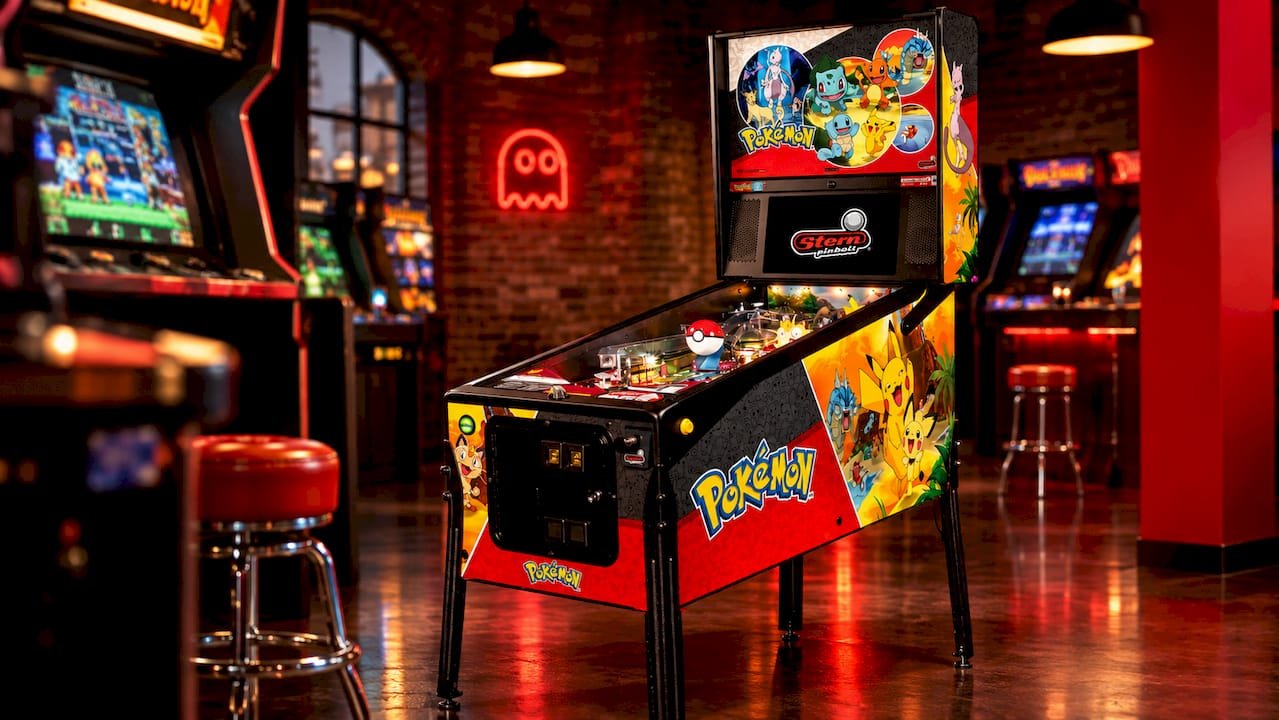
If pinball is part of your plan, we can help you price and fill it. We carry new and used pinball machines, including Stern Pinball machines and American Pinball, plus Stern accessories such as toppers and art blades. We deliver nationwide in the Lower 48 and accept Bitcoin and other cryptocurrency.
Trading in a machine or selling one from your current floor works too. Start at Old Town Pinballs and tell us what your venue needs. If delivery cost is on your budget sheet, our guide to pinball machine shipping cost explains what to expect.
FAQ
How much do you need to start an arcade?
It depends on size and city. A true mid-size venue more often lands between $250,000 and $650,000 all-in, according to Report Desk, with games making up 30% to 50% of that. A smaller game room with a tight list of machines can cost far less. Build your own number from a game list, a build-out quote and several months of working capital.
How many machines can I fit in my space?
A common planning figure is about 50 square feet per game, including walking space. A 2,000-square-foot room therefore holds around 40 machines if you add no seating or party area. Measure your actual layout, since counters, restrooms and prize areas take room.
Do I need a license to run an arcade?
Almost always. Expect a business license, zoning approval and, in many places, an amusement or coin-operated device permit, sometimes charged per machine. Food, alcohol and music add their own approvals. Call your city’s licensing office and planning department before you sign a lease, since rules differ by city and state.
Should I buy machines or share revenue with an operator?
Buying costs more upfront but gives you control over titles, pricing and the full income, and the machines remain assets you can sell or trade later. Revenue-share arrangements lower the initial spend and split income, with ratios that vary by deal. Choose based on your budget and how much control you want over the lineup.
Sources
- How Much Does It Cost to Open an Arcade? (Report Desk)
- Amusement Machine Market in the United States (IndexBox)
- How to Start an Arcade Business (Attractions Marketing Pros)
- A Dozen Considerations to Picking the Right Mix of Games (Industry Owls, 2011)
- Revenue Operations: Building an Arcade (IAAPA)
- Get a Mechanical Amusement Device permit (SF.gov)
- How to Start a Video Game Arcade (ZenBusiness)
- SBA Small Business Resource Guide 2025-2026
- How to Write an Arcade Business Plan (LivePlan)
- Dynamic QR code pricing compared (AriaQR)