
An arcade machine costs anywhere from about $130 for a countertop unit to nearly $10,000 for a ready-built home cabinet, and original or collector-grade machines can go well beyond that. According to Retro Field Guide’s 2026 catalog of ready-built home machines, U.S. sellers list prices from $129.99 to $9,895. Where you land depends on cabinet type, condition, rarity and what it takes to get the machine into your house or business. If you want a machine with real mechanical action rather than a screen, a new or used pinball machine from an authorized dealer is the cleanest way to buy: you see the exact machine, and delivery is handled.
This guide gives you the price bands by type, explains what pushes a price up or down, lists the costs that are not on the sticker, and shows how to tell whether an asking price is fair.
TL;DR
- Ready-built home arcade machines are listed at roughly $130 to $9,895 in 2026, with countertop units at the bottom and full upright cabinets at the top.
- Original 1980s cabinets for common titles usually trade at about $800 to $2,000, and sought-after ones at about $1,500 to $4,000.
- Condition, working monitor, originality and demand move the price more than the game title alone.
- Budget for freight, moving help, repairs and add-ons on top of the purchase price.
- Pinball is the arcade format that keeps its feel, and a dealer can quote, deliver and take trades.
Table of Contents
- Arcade machine prices by type
- Original and vintage machines: price depends on condition
- Home arcade versus resale value
- The costs that are not on the sticker
- How to tell whether an asking price is fair
- Arcade machines for a business
- Why pinball belongs in the arcade budget
- Buy your next machine from Old Town Pinballs
- FAQ
- Sources
Arcade machine prices by type
The first question is what kind of machine you mean. A tabletop box with a few dozen games and a full-size upright with a real control panel share a name but not a price tier.
Retro Field Guide’s 2026 cabinet-type table, built from seller-listed prices on 93 prebuilt home machines from 19 makers, breaks it down like this:
| Cabinet type | Listed price range (2026) |
|---|---|
| Countercade (countertop) | $129.99 to $184.99 |
| Bartop or tabletop | $599 to $1,399.50 |
| Cocktail table | $599.99 to $3,099 |
| Upright (stand-up) | $499.99 to $6,295 |
The same publisher puts the overall range for 79 U.S.-priced, ready-built machines at $129.99 to $9,895. Countercades are the cheapest category and uprights the most expensive.
These are prices for new, home-oriented machines, many of them multi-game units that emulate dozens or hundreds of classics. They are a useful baseline, but they are a different product from an original cabinet that ran in an arcade in 1983.
What the low end gets you
A countercade is a small, light unit you set on a table. It plays recognizable games, but it is a novelty piece, not a piece of furniture. If the goal is a family game night in a spare room, it is the cheapest way in. If the goal is the feel of a real cabinet, you will want to look higher.
What the high end gets you
At the top of the ready-built range you are paying for full-size cabinets, larger screens, better controls and more game choice. Many sellers list “starting at” prices, so the figure you see may rise once you pick screen size or options. More on that in the section on extra costs.
Original and vintage machines: price depends on condition
Original machines do not have a list price. They have a market, and condition drives it.
A 2026 value guide from WorthPic puts a working original 1980s machine at roughly $800 to $2,000 for common hits such as Pac-Man, Ms. Pac-Man, Galaga and Centipede. Sought-after cabinets, such as Donkey Kong, Tempest, Star Wars or a four-player Teenage Mutant Ninja Turtles, run roughly $1,500 to $4,000.
Those are values for working machines. Condition changes the picture fast. Retro Only’s directional asking ranges, updated in April 2026, run like this:
| Condition | Typical asking range |
|---|---|
| Trashed or non-working | $0 to $50 |
| Project cabinet needing work | about $100 to $800 |
| Working upright | about $500 to $3,000 |
| Fully restored or premium | about $1,500 to $5,000+ |
Treat these as directional, not as a price list. They show the shape of the market: a low sticker on a project cabinet is not a bargain until you add what it takes to make it work.
Why the same title sells for very different prices
Four things do most of the work:
- Condition. Cosmetic wear and mechanical health both count. Faded side art, a cracked marquee or a dim monitor all pull the price down.
- Originality. An all-original machine is usually worth more than one with replaced parts or a conversion kit.
- Monitor health. On a vintage video cabinet the screen is the part that is hardest to fix, so a bright, burn-in-free picture matters.
- Demand and rarity. Famous titles and four-player cabinets draw more buyers.
Retro Only also lists location and shipping among the drivers. A machine that is cheap in one state can be expensive once it is trucked to yours.
Home arcade versus resale value
If you are buying a mass-market home cabinet, expect it to lose value. WorthPic’s 2026 guide says home Arcade1Up cabinets resell for about $100 to $500 for most models, with deluxe or Legacy versions reaching about $700. A multi-game “Pandora’s Box” style cabinet showed up at about $850 to $950 in a few Mercari sales.
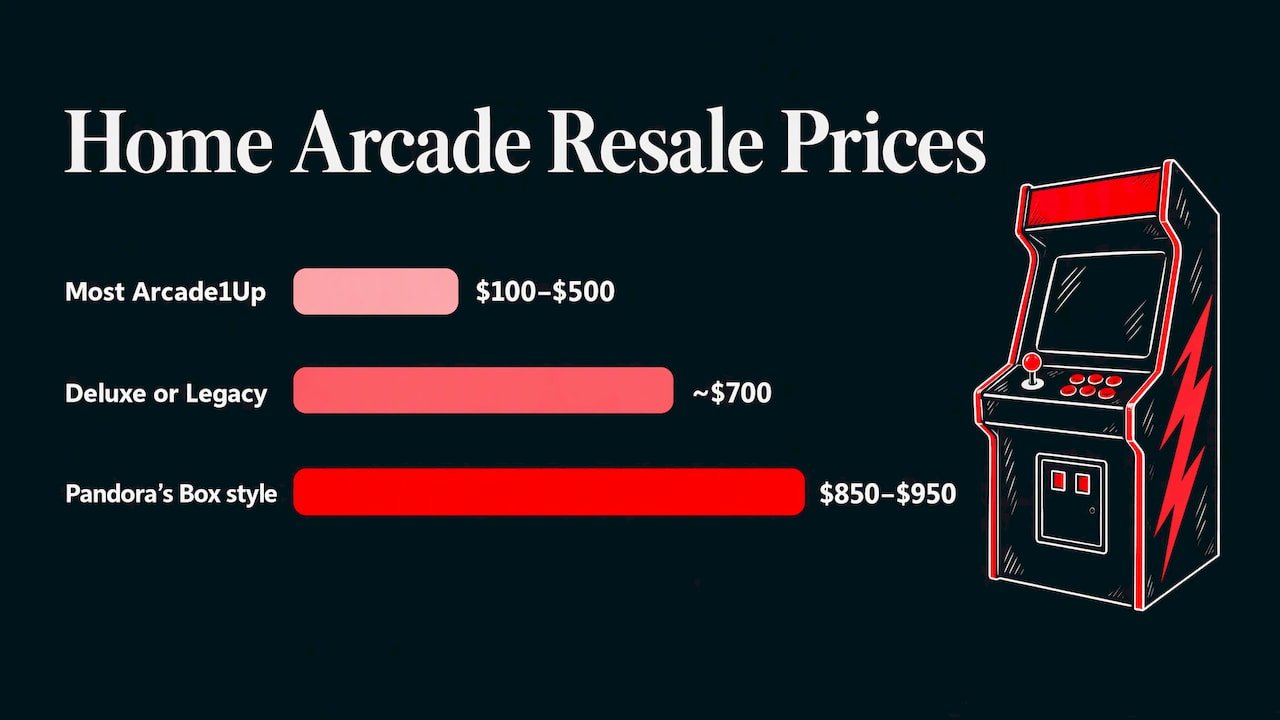
That gap between new price and resale price is worth knowing if you are buying for a family room and may want to sell in a few years. Machines that are collectible, and that are maintained, tend to be easier to trade on.
The costs that are not on the sticker
The purchase price is rarely the total. Retro Field Guide is direct about it: the sticker price is not always the final price. Some cabinets need a screen or TV supplied by the buyer, options such as screen size change “starting at” pricing, shipping terms vary between sellers, and risers are a common add-on.
On used machines, Retro Only’s budgeting advice lists the lines you should plan for:
- Freight or truck rental
- Moving help at both ends
- Repairs, especially monitor and control-panel work
- Cabinet damage and wiring cleanup
- Replacement artwork
- Tools
Freight and moving
Full-size machines are heavy and awkward. Plan the route before you buy: a doorway, a staircase or a tight basement turn can decide whether a machine fits. If you are weighing pinball, our guide to how much a pinball machine weighs and how to move it covers the handling side, and the page on pinball machine shipping cost explains what freight involves.
Repairs and parts
Budget a cushion. Items that fail on older machines are not always the ones you can see in a listing, and a fully restored machine costs more up front because someone else has already paid that bill.
How to tell whether an asking price is fair
Private sellers can ask anything. The Museum of the Game’s buying tips put it plainly: a seller can name any price, so the buyer has to research fair market value. The same page notes that price differences are normal because of condition, including damage that does not show up well in online photos.
A short routine works for any machine:
- Find comparable sales. Look at what the same title in the same condition has actually sold for, not just what sellers are asking.
- Ask for a video of the machine running. A working monitor, responsive controls and all lamps or lights on are what you want to see.
- Check originality. Ask which parts have been replaced and whether the artwork is original or reproduction.
- Price the delivery. Add freight and handling to the asking price before comparing offers.
- Add a repair reserve. For anything not described as fully restored, keep money aside.
Photos flatter machines, and listings leave out what a seller does not know. Judging condition from a distance is a skill of its own, and this guide to finding, judging and buying collectibles from vintage stores is a good companion for learning to look past a listing photo.
Arcade machines for a business
If you are buying for a venue, the numbers above are only the start. Commercial machines are in use all day, so condition, reliability and the games you pick matter as much as the purchase price. Permits, space and game mix are the other big line items, and our guide to starting an arcade business walks through costs, permits and game mix.
For a mixed floor, one type of machine stands out: pinball adds real mechanical play that screen-based cabinets cannot match, and it fills a different slot in the room than a row of video cabinets.
Why pinball belongs in the arcade budget
Video cabinets sell nostalgia. Pinball sells physical play: a ball, flippers, a lit playfield and a machine that behaves a little differently every game. That is why families, collectors and venue owners keep it on the shopping list even when they started by searching for a generic arcade machine.
It is also easier to buy well. Pinball machines are made by a handful of manufacturers, new models carry a manufacturer’s configuration, and used machines have an active resale market. Browse our pinball machines, the Stern lineup or American Pinball to see what is available. If you want to understand where the format came from, we cover it in Pinball Machine History.
If financing is the sticking point for a bigger purchase, see pinball machine financing options.
Buy your next machine from Old Town Pinballs
We sell new and used pinball machines from major brands, and we are an authorized dealer for Stern Pinball and Spooky Pinball. We also handle accessories such as toppers, art blades and parts, and our buy, sell and trade service lets you move a machine you own toward one you want. Delivery is nationwide across the Lower 48, and we accept Bitcoin and other cryptocurrency.
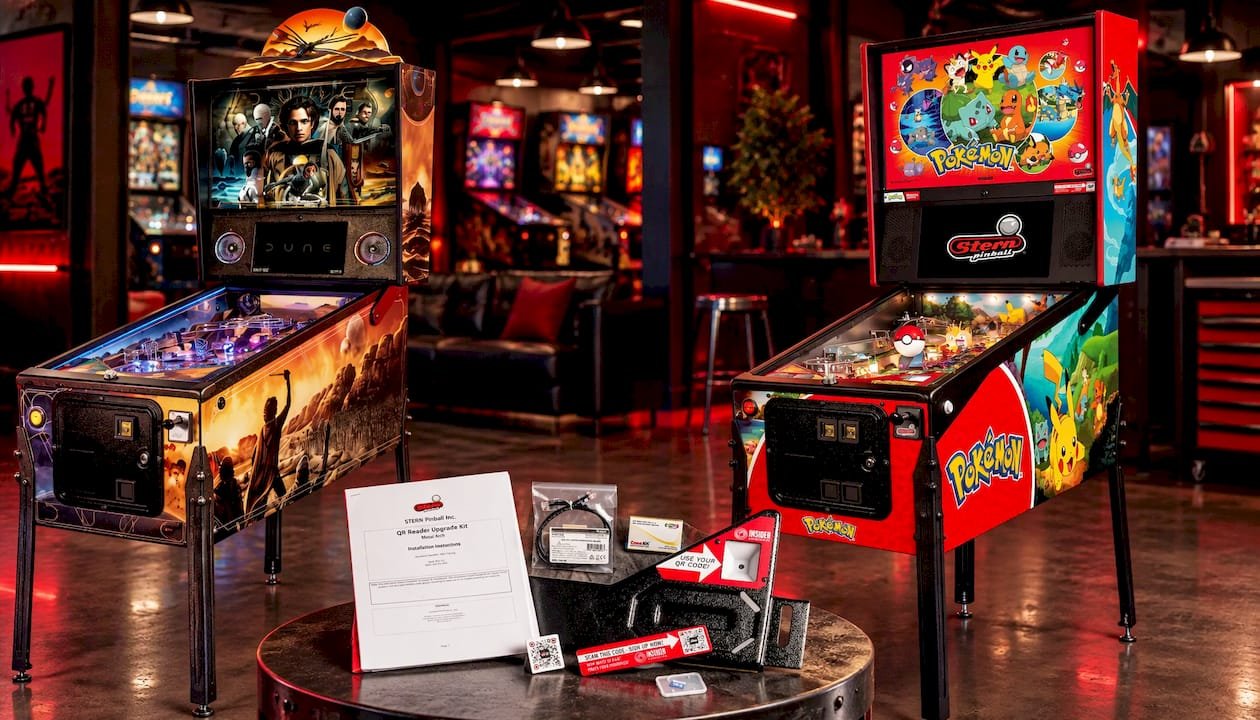
Start with the full pinball machine selection, or go to our home page to see the buy, sell and trade service and nationwide delivery.
Our view: buy the machine you will still want in five years
Most people who search for arcade machine costs are really asking what a good game room costs. We think the answer starts with the machine you will walk toward every day, not the cheapest sticker.
That is why we focus on pinball. As an authorized dealer for Stern Pinball and Spooky Pinball, we can offer the latest machines and the offers that come with new releases, and our used inventory gives collectors and first-time buyers a way in at different budgets.
We also think the buying process should not end at checkout. Our buy, sell and trade service means the machine you buy today can be part of the next deal, and nationwide delivery in the Lower 48 takes the freight problem off your plate. For buyers who prefer it, we accept Bitcoin and cryptocurrency.
Whether you are a collector hunting a rare title, a family planning a game room or a business owner adding an attraction, tell us what you are after and we will help you find it.
the author
FAQ
How much does a home arcade machine cost?
In 2026, ready-built home machines are listed at about $129.99 to $9,895 by U.S. sellers, according to Retro Field Guide’s price guide. Countertop units sit at the bottom and full upright cabinets at the top. Add shipping, a riser or other options to the sticker price.
How much does an original 1980s arcade cabinet cost?
Working originals of common titles such as Pac-Man or Galaga are valued at roughly $800 to $2,000, while sought-after cabinets are valued at about $1,500 to $4,000, based on WorthPic’s 2026 guide. Non-working or project machines cost less, and restored ones cost more.
Are arcade machines a good investment?
Some collectible machines hold value, but mass-market home cabinets usually resell for far less than their new price. WorthPic reports most Arcade1Up cabinets reselling for about $100 to $500. Buy for the enjoyment first, and treat any resale value as a bonus.
What extra costs should I plan for?
Plan for freight, moving help, repairs, replacement artwork and tools, as Retro Only’s budgeting list suggests. For machines sold with options, check which accessories and screens are included. For a pinball purchase, nationwide delivery in the Lower 48 is part of what we offer.
Sources
- Arcade Machines and Cabinets for Home: Prices and Types, Retro Field Guide
- How Much Does an Arcade Machine Cost? (2026 Prices), Retro Field Guide
- Arcade Machine Value, WorthPic
- How Much Do Arcade Machines Cost?, Retro Only
- Videogame and Pinball Buying and Selling Tips, Museum of the Game